
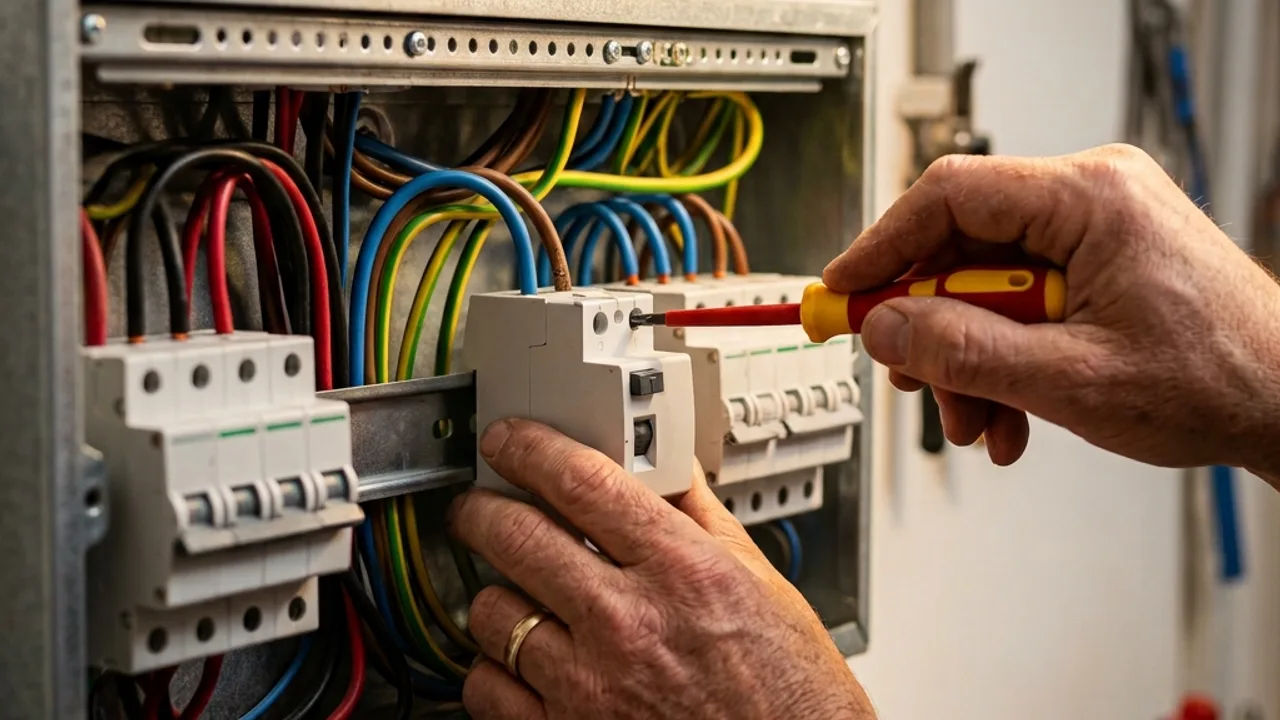
A safety switch that keeps tripping needs the cause assessed rather than repeated resetting. When the same device trips again, it is tempting to blame the appliance most recently used or assume the switch itself needs replacing. Neither conclusion follows from the symptom alone. The useful outcome is an explanation of the cause and a repair that addresses it, not simply another reset.
This guide is about arranging that investigation, not carrying out electrical testing. Keep clear of damaged equipment, do not open a board and do not repeatedly reset a device that continues to trip. For smoke, fire or immediate danger, call 000. Our fault-finding service guide explains the kinds of work a licensed contractor may discuss.
Call about a recurring electrical fault with the affected rooms, safe observations and what was operating when the trip occurred.
The protective devices do different jobs
People often use “fuse”, “breaker” and “safety switch” as if they mean the same thing. Knowing which device has operated helps the conversation, but the appearance of the board is not a diagnosis. An old label may also fail to explain the current installation clearly.
The Electrical Safety Office’s safety-switch guidance distinguishes protection against electric shock from the overload and short-circuit protection provided by circuit breakers. Our safety-switch installation guide covers that distinction in more detail. If you cannot identify a device without touching or opening equipment, there is no need to do so for an enquiry.
A pattern can help, but it is not proof
The timing of a fault can be useful information. Perhaps lights went out when an appliance started, or the problem appeared after rain. That tells the electrician what was happening when you noticed the issue. It does not establish which component failed or whether the appliance is the only thing involved.
A description of what happened naturally is enough. There is no benefit in deliberately recreating the fault, opening a fitting or continuing to use damaged equipment to collect more observations. A contractor can decide which tests are appropriate. The electrical observation checklist is limited to information that can be gathered without exposing wiring or entering a roof or subfloor.
Fault finding and repairs may be priced separately
An investigation has a different scope from replacing a known defective item. Until the cause is established, the contractor may not be able to price the complete repair. That uncertainty should be explained rather than hidden inside an apparently comprehensive figure.
A clear proposal identifies the call-out or diagnostic charge, what that includes and when further approval would be needed. If parts or additional work become necessary, you should understand the proposed change before agreeing to it. A diagnostic fee is not automatically a repair price, and a repair quote should not quietly assume that someone else has already established the cause.
The affected area changes the conversation
One dead outlet, several rooms without power and a whole-property interruption are different descriptions. They help establish the extent of the problem without telling the contractor what the solution must be. In an attached home, shared lighting or common equipment can also involve another responsible party.
If neighbouring homes or shared equipment seem affected too, mention that when you call. For an apartment, the Cleveland guide covers the practical distinction between a private unit and common property. Each guide helps clarify access and responsibility before work is arranged.
Send the symptoms and the affected area if a written enquiry is easier. Include only what you can safely observe.
Replacement is one possible outcome, not the starting assumption
A recurring trip may lead to a discussion about an appliance, a circuit, a connection or a protective device. The value of investigation is that these possibilities can be separated. A replacement board is a different decision from a targeted repair, even if both appear in an initial conversation about “old electrics”.
The repair-or-upgrade article explains how to compare those scopes. Where additional protection or a broader change is recommended, the proposal should explain the reason. You should not need to infer from a long list of equipment whether the current fault will actually be addressed or whether optional improvements have been included.
Household needs belong in the appointment plan
An electrician may need to isolate parts of the installation while investigating. That can affect a home office, refrigerated items or equipment that must remain powered. The practical conversation is about those needs before attendance, not an assumption that testing will leave every room available throughout the visit.
If the property is rented, the tenant, owner and managing agent also need a clear understanding of who can approve work and arrange entry. A safety concern should be reported through the property’s repair process rather than being hidden within a future improvement request.
Finish with an explanation you can use
The useful handover is more than “it works now”. It explains what was found, what was changed and any remaining limitation or recommended follow-up. Where controls or circuit labels change, the household needs to understand the new arrangement. Relevant work or test records should be discussed with the contractor.
Electrical work is not a DIY repair task; the Electrical Safety Office sets out that boundary. A safe observation is useful context, but only testing can separate an appliance symptom, a fixed-wiring fault and the repair that may be required.
Start an enquiry about the fault. Any attendance, investigation charge and repair scope need direct confirmation.