
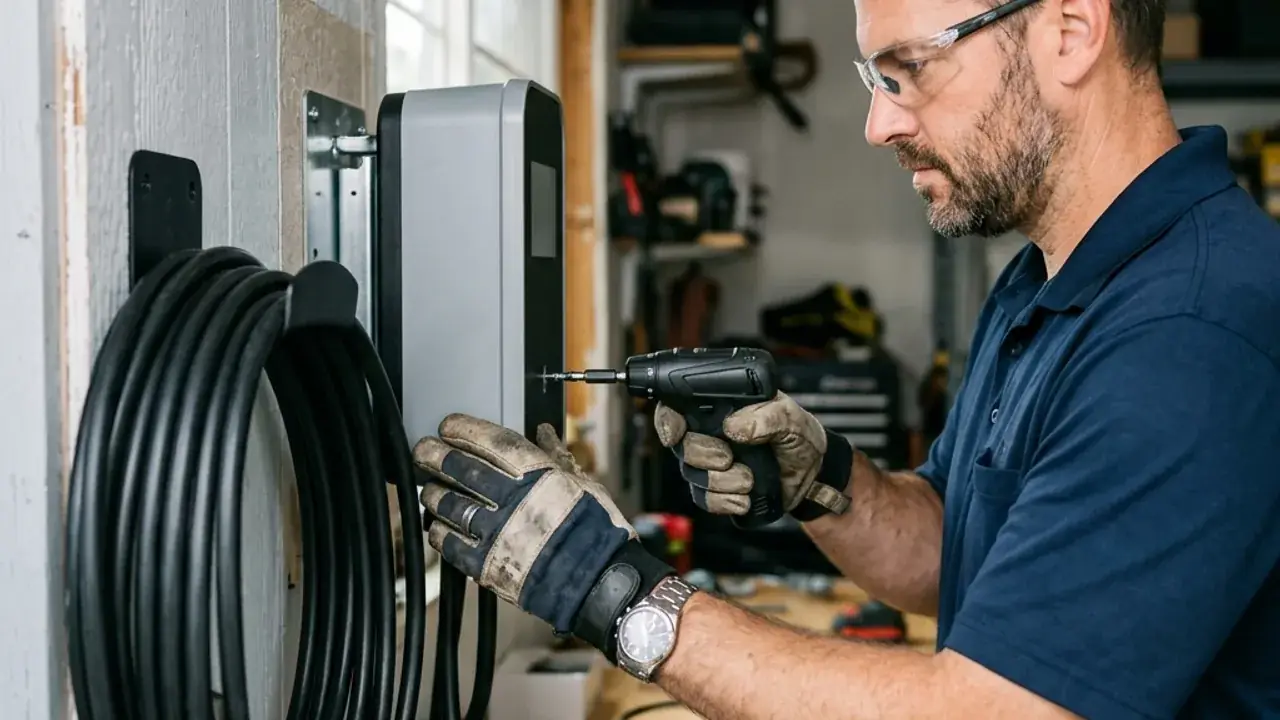
Charging an electric vehicle (EV) at home is a practical convenience, but choosing the charger is only one part of the installation. Where the car parks, the route back to the switchboard and the rest of the household’s electrical use all shape the job. A charger that looks suitable in a product comparison still needs an installation planned for the actual property.
The aim is a written scope that connects the equipment choice with everyday use. It should explain what is included, which assumptions have been made and what may need confirmation before work begins. Our EV charger installation guide introduces those decisions without treating a particular charger or supply upgrade as the answer for every home.
Call about your home-charging plans to start an enquiry. A contractor's availability and installation proposal need separate confirmation.
Begin with the parking position
A convenient charger needs to work with the way the car is normally parked. The preferred wall, the position of the vehicle’s charging inlet and the route of the cable are useful parts of that description. A garage layout can also change when storage, another vehicle or a future renovation is considered.
The useful planning exercise is to describe normal use rather than choosing an installation position solely because it is close to an existing outlet. The contractor can then discuss the electrical route and mounting options. Our Thornlands locality guide offers practical context for thinking about charging alongside the rest of the house, without assuming that every home has the same layout.
Separate equipment choice from installation cost
Two quotes may not be comparing the same package. One might include the charger, another only the installation of a customer-supplied unit. Mounting, cable route, circuit work, testing and commissioning may be described at different levels of detail. Those differences can matter more than the headline total.
Where the model is not yet selected, that uncertainty should be visible in the proposal. The electrical requirements can depend on the actual equipment and connection arrangement. The Energex guidance for EV charging connections is the relevant primary reference for connection considerations in its network area; the electrician can determine how they apply to the installation.
More charging capacity is not the only question
The household may be cooking, cooling rooms and using other appliances while the vehicle is connected. That makes the existing supply and the proposed charging arrangement part of the same conversation. The highest available charger rating is not a substitute for understanding what suits the home’s installation and use.
Our service guide explains that load management can sometimes offer an alternative to a larger supply upgrade. This is an option for assessment, not a promise that every property can avoid other work. A useful quote explains the proposed arrangement and its limits. If a board change is recommended, the switchboard repair-or-upgrade article helps separate that scope from the charger itself.
Cable access affects the practical scope
A mounting position may look close to the board on a floor plan while the workable cable route is less direct. Finished walls, other storeys and the intended appearance can affect the proposal. The purpose of discussing access early is to make those assumptions visible, not to expect the homeowner to design or inspect the wiring route.
An installation quote should explain what happens to surfaces disturbed by the work and whether any restoration is excluded. The power and lighting guide covers similar access distinctions for smaller additions. Existing photographs of visible areas can help explain the property, but no enquiry requires opening equipment, entering a roof or exposing wiring.
Send your parking layout and charging plans if you would like to discuss the installation. The exact equipment and electrical scope can then be confirmed with a contractor.
Ownership and permission can change the sequence
In an apartment, townhouse or shared parking area, the person using the car may not control all the property or equipment involved. The first practical distinction is between a private installation location and common property. That question should be resolved before paying for equipment or assuming an installation date.
The Cleveland property guide discusses common-property boundaries. For a charger planned as part of a larger home project, the Ormiston kitchen-renovation guide considers trade timing and restoration of opened walls. A quote needs the correct decision-maker and a clear installation location, particularly when the cable route may extend beyond the car space.
A useful handover explains the installed arrangement
The finished installation should be understandable to the person who will use it. That includes the relevant controls and any limits or settings that the contractor explains as part of commissioning. Equipment information and installation records are worth discussing before work begins, especially if the homeowner will not attend the handover.
This is not a guide to setting electrical protection or modifying charger wiring. The Electrical Safety Office warns against DIY electrical work. The useful household role is to understand the agreed arrangement and operating information, with technical changes left to appropriately licensed people.
Compare the complete price and scope
An installation proposal is easier to compare when the charger, electrical work, mounting and any additional items are clearly identified. The ACCC’s price-display guidance explains consumer total pricing, including taxes and unavoidable fees. It does not provide an electrical installation rate or establish what a particular home will cost.
The electrical quote comparison helps you check two prices alongside their equipment, testing, travel and restoration details. A cheaper total may cover a different installation. If the project also involves a wider renovation, the renovation electrical article helps keep confirmed work separate from future possibilities.
Start a home EV charging enquiry with the vehicle or charger model, parking position and any known switchboard details.