Home Electrical Safety Checklist
Thirteen things worth checking before you call a licensed electrician Redland Bay households can rely on - most take two minutes and tell you whether the job is urgent, worth booking soon, or fine for now. The full checklist is below; use your browser's print function to keep a copy.
What a licensed electrician checks first in a Redland Bay home
1. Check for an RCD (residual current device, the technical name for a safety switch) on every circuit
A circuit breaker alone stops overloads, not shocks. Many older homes have partial or no RCD (safety switch) coverage - press the test button on each one (if fitted) to confirm it trips.
2. Look for a ceramic-fuse or unlabelled switchboard (the box distributing power around your home)
Ceramic fuse boards from before the 1990s usually have no RCD (safety switch) protection at all and are a strong sign the board needs assessment before a renovation adds load.
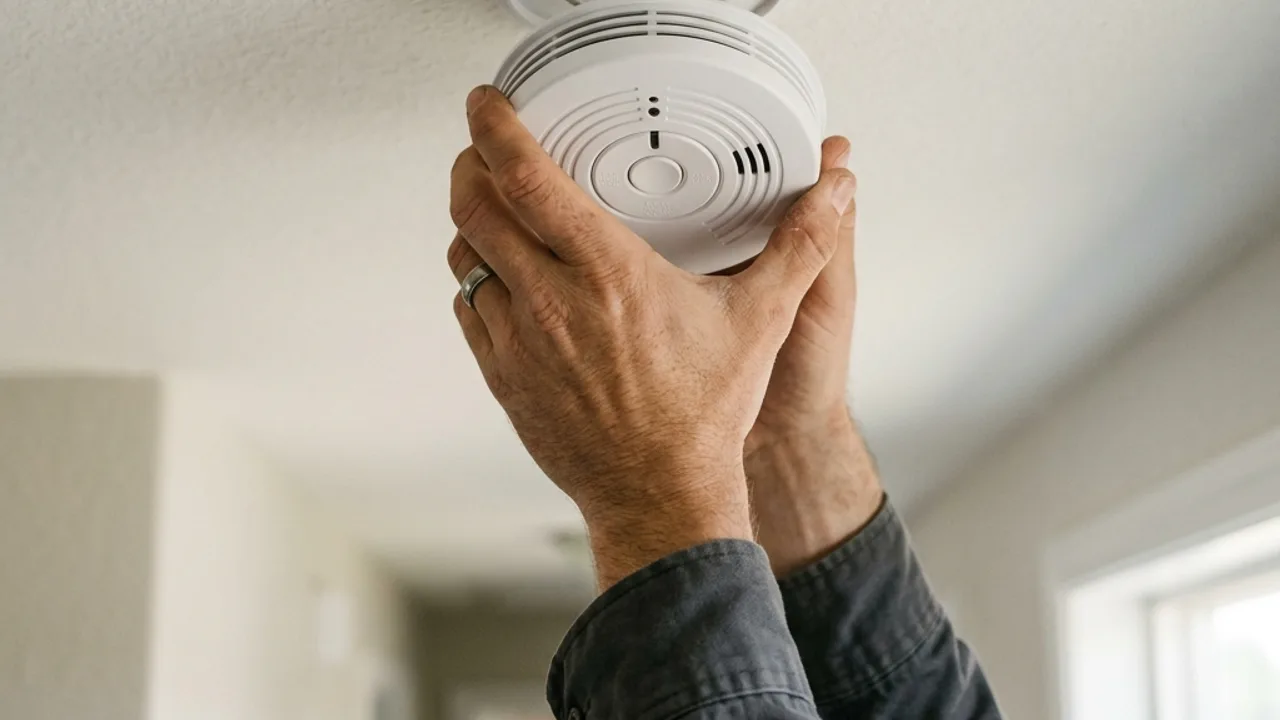
3. Confirm smoke alarms are photoelectric, not ionisation
Ionisation alarms react poorly to smouldering fires. QLD legislation requires photoelectric alarms, and older homes often still have the wrong type.
4. Confirm smoke alarms are interconnected
A single alarm sounding is not enough if it cannot wake someone in another room. Interconnected alarms trigger together across the whole home.
5. Count power points per room against actual use
Rooms with double adaptors and daisy-chained power boards are a sign the circuit needs more outlets, not more extension leads.
6. Check for warm power points or switches
A power point or switch that feels warm to touch can indicate a loose connection or overloaded circuit - worth a fault-finding callout before it worsens.
7. Note any flickering lights under load
Lights that dim or flicker when an appliance switches on can point to a loose neutral connection or an undersized circuit.
8. Check outdoor power points are weatherproof-rated
Standard indoor-rated points used outdoors corrode and become a shock risk, especially in bayside suburbs with salt-air exposure.
9. Check switchboard capacity before adding an EV charger or split-system
A board already near capacity from ducted air conditioning or hot water may need an upgrade before a new high-draw circuit is added.
10. Confirm the switchboard has a legible circuit directory
An accurate, labelled directory means faults can be isolated quickly - many older boards have none, or one that no longer matches reality.
11. Check for exposed or damaged cabling in roof or subfloor spaces
Rodent damage and ageing insulation on exposed cabling are common in older Redlands homes and are a fire risk if left unaddressed.
12. Ask when the home was last inspected by a licensed electrician
If nobody can answer this, or it has been more than several years, an inspection before any renovation or sale is worth booking.
13. Confirm rental compliance if you are a landlord
QLD rental properties already require interconnected photoelectric smoke alarms and safety-switch coverage - checked before a new or renewed tenancy, not after.
Method: how this checklist was put together
What it is: a general awareness checklist, not a compliance certificate or a substitute for a licensed inspection. A tick against every item does not mean your home is fully compliant - only a licensed electrician can confirm that.
Method: each item is drawn from the electrical fault and compliance patterns most commonly reported by licensed electricians working in Queensland homes, cross-checked against current QLD electrical safety and smoke alarm requirements.
Sources: QLD electrical work licensing and safety-switch (RCD - residual current device, the common name for a safety switch) requirements from worksafe.qld.gov.au (WorkSafe Queensland's Electrical Safety Office); smoke alarm legislation from qld.gov.au.
Assumptions: the checklist assumes a standard suburban home and does not cover acreage, three-phase (a heavier-duty power supply used for larger equipment and some acreage properties) or commercial installations, which need a site-specific assessment.